Sunday, July 10, 2022

The Return


Until recently if you asked me how the pandemic changed my life I’d have said that fortunately I was insulated against its worst effects and it didn’t change my life much. I would have been wrong. I just couldn’t see it. What opened my eyes? I went to synagogue in person for the first time since the beginning of the pandemic and when the Torah was taken out of the ark, I cried. I had not been in the presence of the Torah for more than two years. I am someone who would not describe herself as religious (spiritual, but not religious), who does not believe in the monotheistic Judaic god-figure, and who was attending a service at a congregation where I didn’t know anyone. It made me mindful. I had a long think about the last couple of years.

Why did I imagine the pandemic had not changed my life that much? To begin with, like many writers, I tend to be reclusive. I’m easily exhausted by social events. I often leave gatherings early or bow out altogether. These days I feel increasingly uncomfortable in large groups, preferring the small dinner party or nature walk with one or two friends, where I can follow a conversation better since I have poor hearing. I had no problem staying home; no problem conversing with people on screenchat with subtitles so that I could understand what they were saying better than in person. I went out maybe once a week to buy food and pick up books at the library (left in front in a paper bag with my name on it). With my reliance on lip-reading, I couldn’t communicate with people in masks and therefore avoided contact outside my home more than most. I missed the gym, but I developed a workout to do at home. I had been working from home for 20 years so my work life did not change. Living in liberal America, everyone I knew wore masks, used hand sanitizer, was super careful, and then got vaccinated as soon as they could when that became available. I didn’t know anyone who had contracted the disease, let alone been hospitalized or died of it.

Over time that changed. All of my children and grandchildren have had it by now. Most of my closest relatives have had it. Many friends have had it, despite vaccinations and following guidelines for being careful. Some have had it more than once. I have still not had the disease, but I expect to get it eventually.

As the Torah reading proceeded at services last Saturday, I reflected on my life before the pandemic and my life now. How could I possibly have thought not much had changed? After 43 years of living in and loving California, I bailed and moved to Oregon. Duh – change. I have more than the pandemic to owe for that move but the pandemic certainly turned the tide. I was looking for a better living situation for us to age in place, better medical care with more options, more resources for seniors, smaller house and yard to manage. I was looking for a place not as heavily impacted by global warming. In California, we lived in an area burning up and drought ravaged. We spent half the year on evacuation warning. For six months out of the year I drove around with my photo albums and handmade quilts in the car in case I had to run for it. My gardens barely breathed under water rationing. We often had bad air from nearby conflagrations. Then the pandemic hit, and I saw my new (second) grandson once right after he was born then not again for seven months. When he was seven months old, I saw him for a few days and then didn’t see him again until he was nearly a year (except on the computer screen). I missed the entire first year of his life and will never get it back. After that we agreed on the move. We simply had to live close to the grandchildren if we wanted to have them in our lives, if we wanted to be a part of their childhood and enjoy watching them grow up at close range. The logistics of making that happen were, of course, extremely complicated and stressful. Glad that’s behind us. But I wonder how long it would have taken us to actually do it, to make the move, if not for the pandemic. The separation from our grandchildren it caused galvanized us into action.

I remember well our arrival in Portland when we went to see the baby at seven months during the first year of the pandemic. We drove, stopping only to use a few rest areas along the way while wearing gloves and facemasks and dousing ourselves in sanitizer. We arrived in the evening to find our Zev (just turned three) playing in the front yard with his mom. He had only seen us on screenchat for seven months. We got out of the car and walked over to him. He asked us, “How did you come to Earth?” Who knows what goes on in the mind of a three-year-old? Perhaps he wondered how we got out of the computer.

Beyond the move to the Pacific NW, the pandemic changed my life in many other ways as well. My book group dissolved. I joined a movie group on zoom and it still meets. My father and brothers and I began a weekly family zoom that has resulted in stronger connections for all of us. Given that my father is 93, the weekly zoom matters a great deal. I also zoom regularly with a group of my women cousins and we have become closer and more in touch with one another’s daily lives. I have a weekly screenchat with one of my closest women friends; a time we hold sacred and a weekly conversation that helps keep us sane in these difficult times. Ironically, the social distancing of the pandemic brought me closer to friends and family and increased rather than decreased the time I spend with many members of my inner circle.

Deep psychological effects of the pandemic crept up on me, impacts that I did not recognize, admit, or understand for quite some time. I find these hard to tease apart from the damage to my soul caused by the sad state of the world. How much is pandemic blues and how much is Jan. 6 disgust, Supreme Court grief, mass shooting trauma, institutionalized racism rage, anti-Semitism fear, environmental destruction despair, and on and on? Sadly, I have lost a lot of my creativity. My imagination feels blunted, often paralyzed. This happened slowly like the proverbial lobster in the stew pot. Somewhere at parboil I stopped believing that anything I write will make a difference. I gave up on creative writing and quit caring that I have entire books that I have written that have not been published and few people have read. What’s the point when human life will soon vanish and no trace of us remain? On what day did I abandon my calling, one of my greatest delights? In what hour did I lose faith?

Lately I notice more and more features of pre-pandemic life re-emerging. Fewer people wear masks. More people will unmask so that I can read their lips and understand them. Events are starting to take place again, often outdoors, nevertheless happening. I have invited a few people over for dinner. I have gone to the home of new friends for a meal. I still wear a mask at the store, the gym, the library; but the world is tentatively opening up again, poking its head out from the shell and feeling the sunshine on its face. As the return unfolds, I find myself poking my head out in an entirely new place with different people, landscape, air, water, light. It’s quite an adjustment. I have to keep reminding myself that I’m no longer a Californian, a definition of myself that I was attached to and loved for a long time. My morning walk has changed dramatically. Where I once walked a path among desiccated grasses surrounded by stands of thirsty oak trees on the edge of a dried-up lake, now I walk in a damp maple and fern semi-rainforest. Where am I? Where did I come to Earth? Where has everybody come to Earth? I call it “the return,” but truly there is no return, only forward motion into the ever-unknown. I want some things back. I miss California oak trees. I miss creative writing. I miss faith.

My new daily walk.

Sunday, December 19, 2021

Wistful for the Old-fashioned Country Childhood


Time folds in on itself. Has it really been this long since I lived with young children? Now they are all more than thirty years old and not easily entertained by building a fort of furniture and blankets. Do children still do that? Times have changed. My three grew up mostly without the internet. None of them had a cell phone before they turned 16 and got their driver’s license. Social media and text messaging did not exist. If we wanted to see a movie, we went to the movie theater or rented a video. Many independent or controversial movies never made it to our small town. Our house was so far out in the woods that for many years we didn’t get TV at all, and when we finally did get TV we had maybe three stations. My children recited and memorized the times tables instead of relying on a calculator. If someone gave one of my children a gift, I expected them to write a thank-you note and mail it. Who writes actual thank-you notes anymore? We ate home-cooked meals every night, heated the house with a woodstove, and read books out loud every evening. Ron and I raised resourceful, thoughtful, creative, capable children.

With grandsons now two and four years old, I enjoy plotting things to do with them. This has recently led me to contemplate how many children coming up today have the kinds of old-fashioned experiences that my children had. Some of the disparity from then to now is not a time disparity but a place disparity. Many more children grow up in urban and suburban areas than rural areas so some of the things my children did are things that country kids typically do and city kids typically don’t. That hasn’t changed from then to now. For instance, my children rode horses. How many children growing up today have ridden a horse? My children know how to bank a fire so that it smolders through the night to keep the house warm. Most children don’t rely on a fire to heat the house.

This line of thinking led me to compile a list of things that I think all children should have experienced while growing up. I would be curious to know how 16-to-24-year-olds score on this list and to learn how many of them had most of these experiences. My list is very much the product of a mom raising country children in the Northern California climate. Nevertheless, I believe that childhood should include these experiences. Here’s a cursory checklist.

Have you ever….

Made hand-cranked ice cream

Rode a horse

Cared for an animal (pet or livestock)

Seen the Milky Way at night in a place far from light-bleed

Built a fort from chairs and blankets and sat inside it and read stories

Planted a cover crop in a vegetable garden in the fall

Baked bread and baked pie with a homemade crust

Collected firewood

Started a fire in a wood-burning stove or fireplace

Slept with a hot water bottle

Put kitchen scraps into a compost pile

Tended a vegetable garden

Read a book before bed by candlelight

Participated in a family read-aloud

Made a puppet show

Gone fishing and eaten the catch for supper

Eaten venison

Flown kites

Rode in a wagon

Distributed homemade holiday cookies to the neighbors

Caught bugs and looked at them under a magnifying glass

Made Christmas tree ornaments

Written and mailed a thank-you note

Made a sachet with lavender (from your own garden?)

Made things out of colorful pipe cleaners

Collected feathers

Gone on a treasure hunt

Driven a stick shift (manual transmission) vehicle

Drank well water directly from a well

Gone swimming in the ocean

Dug clams on the beach and roasted them over a campfire

Danced in the rain

Made something useful out of wood

Sewn clothing

Made candles

Drawn a map

Gone to museums of natural history, science/technology, culture, and art

Seen a live play, heard a live concert, seen a live dance

Swung on a tire swing

Heard frogs croaking their mating song in winter

Made popsicles out of juice

Gone cherry (or berry or apple or peach or etc.) picking

Canned and preserved fruits and vegetables in the summer to eat in the winter

Put up applesauce

Climbed a tree (sat in a tree to read a book?)

Painted a rock

I could list many more such things but let this suffice. I can’t say that I did all these things as a child myself because I did not but I think my children did. I remember fondly and with pride that one year Yael put up quarts of peaches, Akili stayed home from school to watch the vet spay the cat, and Sudi went out on the deck every night for a month to observe the moon to write about it in his moon journal (a school assignment). My children attended a small country school where families brought their pet goats along to the Spring Sing. When my children went trick-or-treating on the street where their school was, one of the teachers handed out warm, fresh, home-baked chocolate chip cookies instead of candy, and of course the cookies were safe to eat right there on the doorstep. The world keeps changing and the pandemic challenges parents every day to raise children in harrowing circumstances. I don’t say it’s easy.

My husband and I raised survivors and optimists, and the human species needs such people in this world of climate chaos, injustice, and horror. I have said it before, I say it again, I wanted to give my children an enchanted childhood so I moved to the forest. That sounds like the description of a Miyazaki film. Maybe that’s why my children and I love Princess Mononoke so much. Add that to the list – all children should see it. Once my son said to me, “Only the three of us know how truly miraculous our childhood was at the Ranch.” All of them live in the city now, but the forest is in their blood. 

Princess Mononoke

Sunday, November 7, 2021

Lost in the Machine


Have you noticed how businesses, particularly within the healthcare industry, have insulated themselves from client/customer contact to an alarming degree using the technological machinations now available to them? I give you a case in point. In July I got a referral to a gastroenterologist (GE) to discuss digestive issues. “Digestive issues” turned out to be an understatement since, if you read my previous blog post, I had a destroyed sigmoid colon that was removed with major surgery. Anyway, back to the GE. The earliest appointment they could give me was in mid-October and it was a telemedicine consultation. I took it and I kept it even though I had the surgery in the meantime. I thought perhaps the GE would have some insights to share. A few weeks before my appointment, I received an email telling me to call the GE’s clinic to have them set up an account for me in their patient portal to provide “paperwork” prior to the appointment. Fair enough. I began trying to call the clinic. Every time I called, I went through a voicemail maze and was put on hold. Sometimes I waited on hold, other times I couldn’t wait around. Twice I waited on hold for 20 minute and never got through to a person. The email about calling the office was sent from a “donotreply” address so I couldn’t respond. The website offered no avenue for contact.

More and more businesses, particularly health clinics, employ the machinations of impenetrable phone and web-based systems to manage incoming communications. When I actually connect with a live human via one of these machines, it takes me a moment to recognize that I’m talking to a person and not a voice message, bot, or assistant-algorithm. I never did get a live person at the GE clinic prior to my telemedicine appointment, which turned out to be a colossal waste of time. The doctor had no helpful advice and doggedly tried to convince me I needed a colonoscopy, despite the fact that I no longer had a sigmoid colon and that surgeons had recently thoroughly examined my colon with my abdomen split wide open using their eyeballs and not a camera on a stick. After I politely cut the session with the useless GE short, I suddenly realized that I had still never communicated with her office.

I tried calling the office yet again, one last-ditch attempt, and once again went through the voicemail maze and spoke to no one. I had never once received an email with a viable address to which I could respond. So I reverted to that 20th century mechanism called pen and paper. I mailed a letter to the clinic and chewed them out for being so inaccessible and I enclosed photocopies of my insurance cards so they could bill for my worthless session with their clueless GE. A few days later, I received a text message from their office confirming that they had received my billing information and the woman who texted me actually gave me her direct-line phone number! So I called her. We discussed the problem I had reaching anyone in the office and she apologized and said they are having systems issues. Ya think?

That clinic was an extreme case, but I have had similar difficulties getting through to healthcare providers and businesses. My husband has had bizarre and unbelievable experiences attempting to order health supplies to support management of his diabetes. He has literally spent hours on hold with no other option. Businesses seem to have given up on the notion of front office staff and are invested in these machined systems that keep clients at arm’s length. It’s infuriating and unviable.

Here’s another story about getting lost in the machine. We have a subscription to the New York Times for home delivery of the Sunday paper to our door and it includes access to all digital content. I read the NYT every day online, Ron plays the word games on his phone, and we enjoy getting newsprint on our fingers while reading an actual paper on Sundays. It’s an old-fashioned pleasure. When I first set up the subscription, many years ago, I received a special rate for it. That good rate lasted for a year. At the end of the year, I called the NYT and asked if they would extend the rate. They did. And they continued to do so for years afterward. Every six months I would call and ask for an extension and they would give it to me.

So a few weeks ago, the good rate expired again, and I called as usual to extend it. The person I talked to said they had no deals available to offer me and my rate would be doubled starting that week. I thought perhaps I had just had bad luck and gotten a mean person or a person having an off day. So I tried going on the chat online and asking if I could get my rate extended. At first I got an assistant-algorithm that couldn’t figure out what I wanted but eventually it passed me off to a chat-person, who also declined to extend my good rate. I waited a few days and called in again and once again was told that the rate couldn’t be extended. We decided to switch to an all-digital subscription, which is less expensive than having the Sunday paper delivered as part of the deal. We couldn’t justify paying so much just to have a hard copy of the Sunday paper when we could access all the content online anyway.

I called the subscription office and explained that I wanted to cancel our Sunday paper subscription and switch to a fully digital subscription instead. The agent then asked, “If I could give you a special rate on the Sunday subscription, would you keep it?” I asked what kind of rate and it was the rate I had originally wanted to keep to begin with. So of course I accepted her offer and now I have the rate I wanted in the first place. Explain to me how this is an efficient way to do business.

I have a friend who just turned 90 who has no computer. She doesn’t know how to use one. Without online banking, she pays her bills by mail. She drives to the AT&T store in the nearby shopping mall to pay her phone bill in person with a check. If she encounters something that is only doable online, she calls a younger family member to take care of it for her. When I want to send her pictures of my grandchildren, I go online at Costco and have prints made, have them delivered to my door, and mail them to her. I’m beginning to think that she is onto something. The convenience of doing everything online or from smart phones is no longer a convenience when more and more transactions require hours on hold or getting lost in the system or a complete inability to make the necessary connection. Lately, I find myself longing for a simpler life, a life outside the technology machines.


This is me reading the Sunday paper a few years back when we first got our subscription.


Sunday, October 17, 2021

What Happened to Amy?


She was blindsided by a health crisis.

Having enjoyed good health all my life, I am in shock to be experiencing a serious health crisis. After major surgery, the long-term prognosis is good for my full recovery and many years of excellent health in the future. But only after a few months of slowly and painstakingly regaining my health will I arrive in this promised future. Oh how I took my health for granted, assuming that with my careful diet and lifestyle, my knowledge of nutrition and how my body works, I could avoid serious illness. It didn’t work that way and I’m still trying to wrap my head around what happened.

Here are the medical facts in a nutshell. Five years ago I had my first diverticulitis attack. Until then, I didn’t know I had diverticulosis. My diet and lifestyle contraindicate ever contracting this disease, but my genetics doomed me. My mother and both my grandmothers had it. It was a time bomb ticking in my body. I have fought valiantly these five years, narrowing what I ate more and more and taking a host of nutraceuticals and herbs to aid digestion. But this summer, soon after I moved to Portland, my health deteriorated. I had one abdominal infection after another, was hospitalized several times, lost my energy, and lost my appetite. The constant antibiotics and constant battle with infections wore me down. Finally, in September, a smart surgeon figured out from my CT Scans that I had entered the endgame of my journey with diverticulosis. I needed to have my sigmoid colon removed, and, as they discovered when I was on the operating table, I needed it removed immediately to save my life. I’m a hard woman to kill.

Removing part or all of the sigmoid colon is a common and routine surgery that has been conducted for decades to address all sorts of issues from diverticulosis to colon cancer. Even though it is routine, with relatively few risks, it is still major surgery. It laid me flat. It’s amazing how quickly our muscles atrophy when we don’t use them. Nearly ten years of diligently going to the gym washed away overnight. I could barely move. I don’t remember anything from the first two post-surgery days. When I got out of the bed and forced myself to move again on Day 3, I crept slowly on a brief walk around the ward using a walker with a member of my care team and a physical therapist walking beside me to prevent me from falling.

My weeklong stay in the hospital after the surgery was actually a pleasure because the care team was terrific. I had super nurses and CNAs, a great physical therapist, a brilliant young surgeon, and other helpful staff who contributed to my recovery. I enjoyed engaging them in conversation and we shared stories, they told me about their families and pets, I learned the meaning of their names, I had them explain their tattoos, they made me laugh, and they kept me entertained and comfortable. I heard how the married women’s husbands had proposed to them (one of my favorite questions). I gave advice on potty training toddlers, dealing with seasonal allergies, and more. They made me feel like the grand dame of the fifth floor. I gave the nursing staff a good laugh by telling them that I felt like I was staying at a spa. (I asked them what time I was scheduled for my manicure.) On my last day, many people popped into my room to say goodbye and wish me luck. One of the CNAs told me, “It has been a pleasure to care for you.” After I had settled in at home, I sent them a bouquet of flowers to thank them.

Coming home was hard. I’m looking at days, weeks, months of slow recovery. I can feel myself improving and getting stronger by very small increments. But I wonder how I will survive these weeks of healing. The days drag. I lack patience for my uncooperative body. I don’t get much done, although I’m easing back into my grant writing work, which I can do from bed. I tire easily and spend too much time during the day sleeping so that I don’t sleep through the night. I take a slow and careful walk outside twice a day without a walker, enjoying the brilliant fall color in the maple trees. If only I could fold time and jump to a few weeks from now. If only. I feel fortunate that my ill health is short-term and that I can look forward to achieving that magical state called “good health” one day in the future. I doubt I would have the courage or determination to continue life if I had a chronic or serious disease with no end in sight.

I have to work to keep my mind occupied and my attitude positive. I am grateful to my friends and family for their extraordinary support. My husband Ron has given me so much. When I was so terribly sick during those first few days after surgery, Ron sat on my hospital bed, held my hand, and sang to me. How could I not feel better from that? I have a long road ahead and keep the vision of a complete recovery as my guiding light. I am reminded once again of the fragility of our lives. Mysterious forces beyond our vision work their designs.

I wish you good health, dear reader. Do not take it for granted.


 A gratitude bouquet. Much for which to be grateful.

Sunday, May 23, 2021

Fresh Start


Last week the New York Times published a piece by a psychologist about rebooting for a better life now that the pandemic appears to be winding down in this country. The article introduced a program called Fresh Start. Participants could sign up to have prompts texted to them every day for ten days to help them rethink their lives and establish new habits, routines, and attitudes. I didn’t sign up, but I have been imagining the prompts. Do you really want to read Middlemarch? When is the last time you laundered your sweat pants? Did you figure out what oregano is and do you know how to use it to make pizza? If you have small children, are you practicing speaking in complete sentences when they are asleep? Have you made a plan yet for what to do with leftover hand sanitizer? Where did you put your boots? You have a puppy? Seriously? 

While the pandemic continues to devastate communities around the world, the U.S., under intelligent and organized national leadership (sigh of relief – finally), has managed to get things under control. And with this new step forward, the psychologist writing for the NYT explains that people think of their lives in chapters and a collective chapter in ours has just ended, with a new one beginning. At the beginning of a new chapter, we have a greater capacity to establish fresh and healthier routines, both for daily living at a granular level and for our lives overall in broader strokes. Rather than returning to a vanished normal (did it ever exist?), we can rethink how we want to live our lives. We can make a Fresh Start. 

I would say that I jumped the gun on this Fresh Start new chapter thing by a few months. I am emerging from the pandemic having already downsized my stuff, moved to Oregon after 43 years in my beloved California, sold that behemoth of a house, rented a little apartment, and become an on-call babysitter for the two little boys who are the center of my universe. I am entering this new reality to find myself laughing maniacally at things that a three-year-old thinks are funny (such as shouting BOO then jumping around like a deranged kangaroo) and changing five-alarm poopy diapers on a supersized toddler who eats more than I do. Not rain nor sleet nor dark-of-night nor global pandemic can keep a Jewish grandmother from her grandchildren. It took me a little while to reorganize, but here I am. 

In my Fresh Start, I have a gluten-free bakery and a four-story gym with an astonishing array of shiny strength-training machines. It does not compare to the little gym I used to go to before. After not going to the gym for more than a year, I have row upon row of equipment at my disposal. If I look hard enough I will probably find a machine in there somewhere that will work the muscles in my eyelids. I have discovered bread and cinnamon rolls again at the mind-blowing gluten-free bakery. If I’m not hallucinating, I’m actually buying a challah every week. I lost ten pounds during the move, then started to gain it back in cinnamon rolls, then started to lose that off at the four-story gym. My body is so confused. 

On Fridays I do a little Shabbat ceremony before dinner every week with the grandchildren. The three-year-old says “you’re setting it up” when I put the candles in the candleholders, pour the grape juice, and cover the challah. He loves to pull his chunk of challah after the blessing. Soon he’ll know the blessing by heart. The toddler pulls his chunk of challah too, and we indulge his love affair with grape juice. He points enthusiastically and shouts at the candles periodically during the evening, chitter-chattering at them in his secret language. I get to bless the children. May the spirit of the universe, that permeates all things, protect them from harm and bring them peace. 

I see in the news that many wells in California are running dry and there is no rain in sight, no snow pack from a painfully dry winter. It rained here every day this week. Sad that I am for California, land that I love, I feel a greater sense of relief than I ever imagined I would feel to have fled the drought and the upcoming fire season to the South. Certainly there is summer fire danger here, but not to the extent in my previous home. My hair is curling up in this damp weather in ways it hasn’t for decades. Who am I? Who do I want to be? How long has it been since I asked myself these questions? I contemplate my options, my actions, my choices, my opportunities. Where do I want to place my focus, my time, and my energy in this Fresh Start? 

I’m not bringing you astonishing news when I say that home is not a place, it’s in our hearts. Locked in the house with my husband during the pandemic, I fell in love with him all over again. Relegated to the computer screen to visit with my children, I spent more time with them than I have in years and appreciate them now more than ever; dazzled that I could have possibly raised such brilliant, compassionate, gifted human beings. Who was I to dare such a thing? How did I achieve such success? Prevented from embracing my grandsons, I quit my old life without hesitation and stepped boldly into a new one where I am present to wrap them in my arms. 

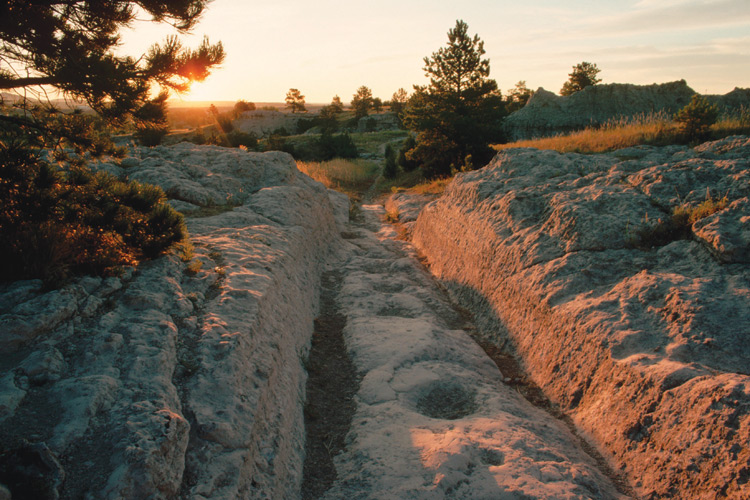
I think of that Chinese character for crisis that combines characters for danger and opportunity. The pandemic brought all of us crisis. What do we do with that? What positive value do we make from it? Where do we go from here? I am grateful that I and those dear to me survived the danger, that I recognized the personal opportunity open to me, that my husband agreed with me about the nature of that opportunity, and that we seized the moment and took the leap together. This move was not easy. I feel like I suffered the hazards of the Oregon Trail to get here, metaphorically speaking; I survived versions of starvation and snakebite, having my wagon stolen (slapped around by beastly interstate movers), contending with rampant disease, being shot at by renegade train robbers, and all that. But I made it to Oregon. What a process! If you had told me one year ago that this is where I would be now, I would have laughed you off and told you to guess again. 

I love my new life.


The usual image for Oregon Trail is the covered wagon. Since that is an image that brings horror to Native peoples, I didn't want to use it. Instead here is a photo of the actual trail.